
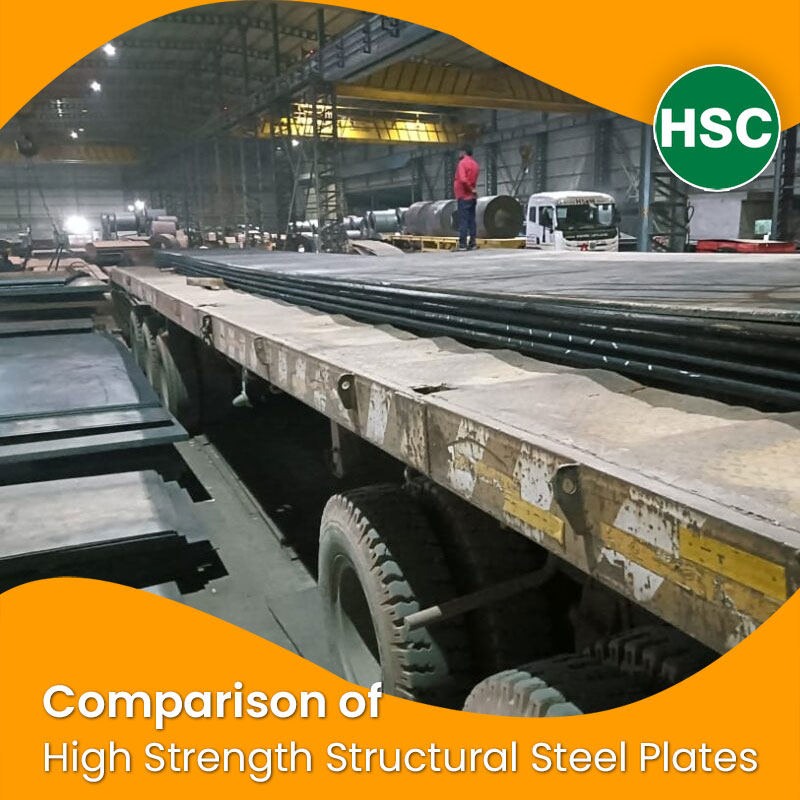
Introduction to High Strength Structural Steel Plates
High-strength structural steel plates are widely used in heavy engineering industries where structures must withstand extreme loads while maintaining reduced weight and structural efficiency. Among these materials, S890QL and S960QL steel plates are two of the most widely used ultra-high-strength steels specified by engineers for demanding applications.
Both grades are manufactured according to the EN 10025-6 standard and are produced using a quenched and tempered heat treatment process that provides exceptional mechanical strength and structural reliability. These plates are commonly used in crane manufacturing, mining equipment, offshore structures, heavy transport equipment, and large engineering projects.
Although S890QL and S960QL share similar production processes and structural characteristics, they differ in yield strength, mechanical performance, and suitability for certain engineering applications. Understanding these differences helps engineers and procurement teams select the correct steel grade for their projects.
What is S890QL Steel Plate?
S890QL is a high-strength structural steel plate produced according to EN 10025-6 standards. It offers a minimum yield strength of 890 MPa and is designed for applications requiring high load-bearing capacity combined with good weldability and toughness.
Because of its strength-to-weight ratio, S890QL plates are widely used in structural engineering where designers want to reduce material thickness without compromising performance.
Typical applications include:
- Crane booms
- Mining machinery
- Heavy transport equipment
- Structural frameworks
- Offshore platforms
What is S960QL Steel Plate?
S960QL is an ultra-high-strength structural steel grade also defined under EN 10025-6 standards. It provides a minimum yield strength of 960 MPa, making it one of the strongest structural steels used in modern engineering applications.
Because of its higher strength, S960QL allows engineers to design lighter structures capable of carrying extremely heavy loads.
Typical applications include:
- Heavy lifting cranes
- Offshore oil platforms
- Mining equipment
- Structural components in heavy engineering
- Transport trailers for heavy loads
S890QL vs S960QL – Key Differences
| Property | S890QL | S960QL |
|---|---|---|
| Standard | EN 10025-6 | EN 10025-6 |
| Yield Strength | 890 MPa | 960 MPa |
| Tensile Strength | 940 – 1100 MPa | 980 – 1150 MPa |
| Heat Treatment | Quenched & Tempered | Quenched & Tempered |
| Typical Thickness | 6 – 200 mm | 6 – 200 mm |
| Weldability | Good | Good with controlled procedures |
| Application | Heavy structures | Ultra-high load structures |
The most significant difference between the two grades is their yield strength, with S960QL providing higher load-bearing capacity.
Mechanical Properties Comparison
| Property | S890QL | S960QL |
|---|---|---|
| Yield Strength | ≥ 890 MPa | ≥ 960 MPa |
| Tensile Strength | 940 – 1100 MPa | 980 – 1150 MPa |
| Elongation | ≥ 14% | ≥ 12% |
| Impact Testing | −40°C | −40°C |
While both grades offer exceptional mechanical strength, S960QL provides slightly higher tensile and yield strength, making it suitable for extremely demanding structural applications.
Applications Comparison
S890QL Applications
S890QL steel plates are commonly used in industries where high strength and good weldability are required.
Common applications include:
- Crane manufacturing
- Mining machinery
- Heavy construction equipment
- Structural engineering projects
S960QL Applications
S960QL steel plates are used in applications requiring even higher structural strength.
Typical applications include:
- Heavy lifting equipment
- Offshore engineering structures
- High-performance transport trailers
- Large industrial machinery
Which Steel Plate is Better?
Both S890QL and S960QL steel plates are high-performance structural materials, and the choice between them depends on the engineering requirements of the project.
S890QL is often selected for applications requiring high strength combined with excellent weldability and structural durability.
S960QL is preferred for applications where maximum strength is required and weight reduction is critical for structural efficiency.
Engineering designers typically select between these grades based on load requirements, design considerations, and cost factors.
Supply Range
Hindustan Steel Corporation supplies both S890QL and S960QL steel plates in a wide range of sizes suitable for heavy engineering projects.
Typical supply range includes:
| Parameter | Range |
|---|---|
| Thickness | 6 mm – 200 mm |
| Width | Up to 3500 mm |
| Length | Up to 14000 mm |
| Standard | EN 10025-6 |
Custom plate cutting and profiling services are also available depending on project specifications.
Industries Using S890QL and S960QL Plates
Both grades are widely used in demanding engineering sectors.
| Industry | Applications |
|---|---|
| Crane Manufacturing | Lifting equipment |
| Mining | Excavators and crushers |
| Offshore Engineering | Oil platform structures |
| Heavy Transport | Industrial trailers |
| Construction | Structural frameworks |
Why Choose Hindustan Steel Corporation
Hindustan Steel Corporation is a trusted supplier of high-strength structural steel plates for global engineering and infrastructure projects.
The company supplies plates sourced from internationally approved mills and supports customers with reliable export logistics, competitive pricing, and technical assistance.
Our experience supplying steel plates to EPC contractors and engineering companies worldwide ensures that projects receive high-quality materials suitable for demanding industrial environments.
Frequently Asked Questions
What is the difference between S890QL and S960QL steel?
The primary difference is yield strength. S960QL provides higher yield strength compared to S890QL.
Which is stronger, S890QL or S960QL?
S960QL steel plate is stronger because it has higher yield and tensile strength.
Are S890QL and S960QL weldable?
Yes, both grades are weldable when proper welding procedures for high-strength steels are followed.
What industries use S960QL steel?
Industries such as crane manufacturing, offshore engineering, mining equipment production, and heavy machinery manufacturing commonly use S960QL plates.
When should S890QL be used instead of S960QL?
S890QL is often used when high strength is required but extreme structural strength is not necessary.